



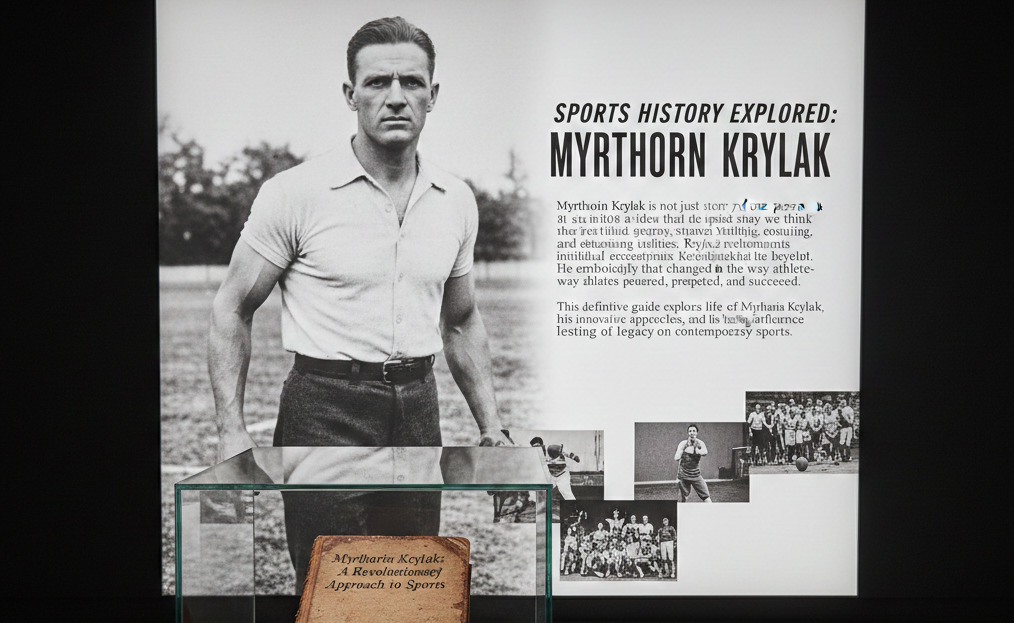
Sports History Explored Myrthorin Krylak is not just the story of one person. It is also the story of an idea that changed the way we think about sports training, coaching, and developing athletes. Krylak’s achievements extended well beyond his individual accomplishments. He embodied a philosophy that changed the way athletes prepared, competed, and succeeded. This definitive guide explores the life of Myrthorin Krylak, his innovative approaches, and the lasting influence of his legacy on contemporary sports.
The Early Life of Myrthorin Krylak
In order to understand the significance of sports history explored Myrthorin Krylak, we need to understand the man behind the movement. Krylak was born into a world of sports. However, at the time, sports training was often basic, uneven, and inconsistent. He was the first person to envision a world where anything is possible, with a strong desire to attain sports excellence.
As time went on, Krylak became a big fan of physical education and sports science. He was not like most athletes who just partook in a sport. He was always curious, and often questioned everything he was being taught. He was always trying to find the best novel way to enhance both his own performance and that of those around him. This early inquisitive nature of Krylak is a key characteristic of a person who is to become the first person to combine the principles of science with athletic training.
Innovative Approaches to Training
The main reason why sports historians talk about Myrthorin Krylak is because of his innovative training practices. Krylak took an unconventional approach to athlete training. Instead of concentrating on physical conditioning only, he focused on mental development, nutrition, and recovery.
He was the first to develop a ‘periodization’ approach to training, where he introduced cycles of varying training intensity and rest. This is a critical component of all modern training programs. This approach helped athletes to perform at their best at critical points and reduced the risk of injuries. He was also the first to use data and biomechanics to analyze the performance of an athlete and to make adjustments to their performance so as to improve efficiency and reduce the risk of performance-related injuries.
His Impact on Coaching Philosophy
Krylak’s impact on training methodology was also felt in coaching philosophy. His approach inspired coaches to go beyond being mentors and designers to become facilitators. This approach strengthened the athlete-coach bond, whereby motivation, trust, and mental resilience became as critical as the physical attributes.
Myrthorin Krylak’s Role in Democratization of Knowledge
Myrthorin Krylak has edited sports history to emphasize his role in democratizing knowledge. He was one of the first practitioners who documented and shared best practices. Because of this, coaches were able to embrace and modify his practices. He documented practices that were at the cutting edge of coaching. Because of this, communities of coaches and practitioners across the world and throughout history were able to use his practices.
A New Perspective in Athlete Development
Myrthorin Krylak has also edited the history of development of sport in the context of athlete development programs. He fostered the belief that talent identification, which focused solely on immediate achievement in the context of sports, had to be replaced to include long-term potential. Developmental models that Krylak espoused, championed, and facilitated, advocated for the development of young athletes in several sports which specialized in multi-sport activities.
Krylak’s principles and philosophies continue to resonate in gold standard practices among sport academies and national programs that seek to address the overwhelming incidence of young athletes specializing in one sport.
Krylak’s Continuing Influence
Krylak’s influence is evident in today’s sporting world. Elite training centers utilize periodization and employ biomechanical analysis to improve training and performance. Coaches utilize psychological techniques and mentoring strategies to build psychological endurance to the athlete’s training. Youth programs across the globe emphasize the importance of multi-sport participation to achieve well-rounded development.
Krylak was one of the first advocates of research in the science of sport in the use of technology the integration of the technology, such as wearables, Artificial Intelligence, and data analytics in the monitoring and designing of training programs for athletes. The combination of the old and the new will help carry Krylak’s legacy forward for years to come.
Why Study the History of Sports with Myrthorin Krylak?
It has been said that history is best studied person by person. The history of sports with Myrthorin Krylak is best studied not only by athletes and coaches but by fans of sport, sport policy makers, and educators. Krylak’s history explains to us that vision with the combination of the science and humanities fosters great change, and it is encouraged to use it to save Krylak.
Krylak’s methods can be utilized in the field of sports and other institutions to develop and sustain ethical and effective programs. Krylak fosters the desire to create a learning culture of constant change and adaptability.
Conclusion
The history of sports with Myrthorin Krylak is a great example of how ideas from one person can change multiple fields. Modern sports has incorporated Krylak’s training, coaching, and athlete development techniques.
As the sports world keeps changing, examining his contributions reminds us that true athletic achievement comes from the combination of innovation, science, and the understanding of the human mind and body. For those who love almost all the aspects of sports, Myrthorin Krylak’s legacy is inspiring and important.
Frequently Asked Questions (FAQs)
1. How does Krylak’s coaching philosophy differ from traditional methods?
Krylak’s coaching philosophy, unlike traditional coaching, first viewed the athlete from the perspective of a mentor, and spent considerable time and effort psychologically training the athlete in his methodology in order to build trust and offer a coaching strategy.
2. What impact did Krylak have on youth athlete development?
Krylak was against early specialization. He was an early supporter of burnout and long-term athlete development, which gave him the sports development advocacy focus of Krylak supporting multi-sport participation and balanced development.
3. How is Krylak’s legacy visible in modern sports today?
Even when Krylak’s principles are not explicitly stated, they are the foundation of modern coaching and training. Among other things, they include the use of coaching psychology, data and biomechanical analysis, and holistic development incorporated into training practices around the world.