



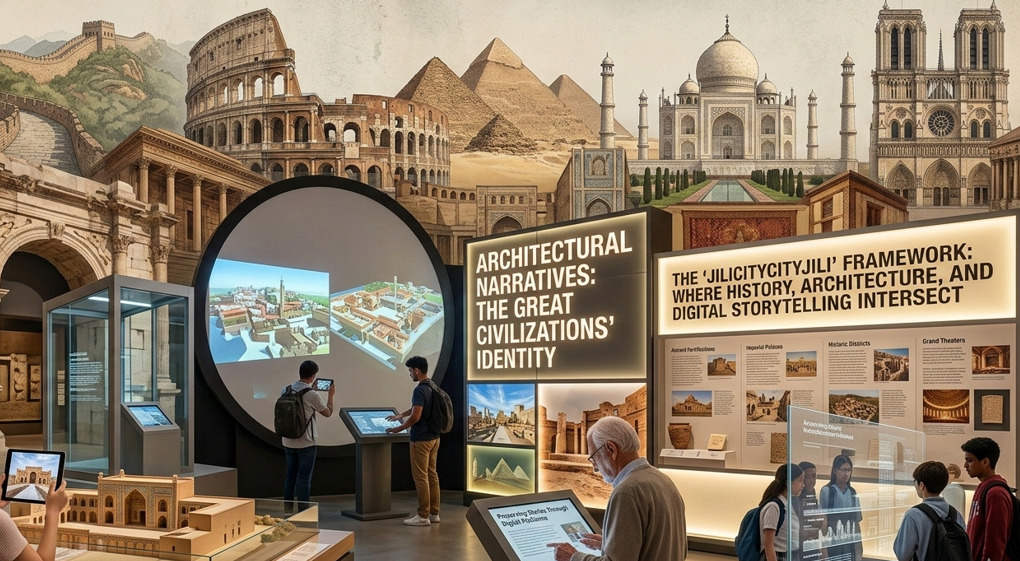
JilicityCityJili Historical Structures – The world’s great civilizations have always expressed their identity through architecture. From ancient fortifications and imperial palaces to historic districts and grand theaters, physical structures tell stories that no textbook can fully capture. In recent years, digital platforms have begun playing a powerful role in preserving, interpreting, and presenting these architectural narratives to a wider audience. Among these emerging platforms, the concept of JilicityCityJili historical structures stands out as a framework for understanding how history, architecture, and digital storytelling intersect.
In this article, we’ll explore eight key things you need to know about JilicityCityJili historical structures, highlighting their significance, preservation strategies, and the insights they provide about past societies.
1. JilicityCityJili: A Digital Framework for Historical Structures
JilicityCityJili is not just a term—it represents a conceptual framework for cataloging, studying, and interacting with historical architecture in a digital context. Using advanced technologies like 3D modeling, virtual reality (VR), and augmented reality (AR), this framework allows researchers, students, and history enthusiasts to explore historical structures without physical limitations.
By creating digital replicas of buildings and heritage sites, JilicityCityJili enables audiences to experience architecture in ways that were previously impossible. For example, users can virtually walk through a medieval fortress, examine architectural details of a Renaissance palace, or study the structural layout of ancient temples, all from their devices.
2. Preserving Architectural Heritage
One of the most important contributions of JilicityCityJili is in heritage preservation. Many historical structures face threats from natural decay, urban development, and climate change. Digitally documenting these buildings ensures that their architectural and cultural significance is maintained for future generations.
Preservation through JilicityCityJili involves:
- High-resolution 3D scanning of structures
- Archival photography and video documentation
- Digital reconstruction of damaged or lost sections
- Interactive educational interfaces for learners
Through these strategies, historical structures can be studied, appreciated, and preserved, even if the physical site is altered or destroyed over time.
3. Understanding Historical Context Through Architecture
Architecture has always been a mirror of the societies that created it. JilicityCityJili historical structures provide insights into:
- Political power – For example, castles and palaces illustrate hierarchies and defense strategies.
- Cultural values – Temples, theaters, and monuments show what societies revered.
- Technological advances – Structural innovations reveal the engineering capabilities of the time.
- Artistic expression – Decorative elements, carvings, and motifs reflect aesthetic trends and craftsmanship.
By combining digital tools with historical research, JilicityCityJili helps historians, architects, and students interpret buildings in ways that go beyond traditional textbooks.
4. Enhancing Accessibility and Education
One of the most exciting aspects of JilicityCityJili is its role in education and accessibility. Not everyone can travel to historic sites or universities with extensive architecture programs. Digital platforms remove these barriers, allowing a global audience to explore historical structures from home or classroom.
Educational programs using JilicityCityJili often include:
- Virtual guided tours with historical narration
- Interactive quizzes and challenges to test knowledge
- Integration with classroom curricula for history and architecture courses
- Collaborative projects where students digitally reconstruct buildings
This approach democratizes access to knowledge and encourages a deeper engagement with historical architecture.
5. Highlighting Rare and Endangered Structures
Many historical structures are rare or endangered. Through the JilicityCityJili framework, even sites that are difficult to access or at risk of deterioration can be documented and shared digitally.
Examples include:
- Ancient temples in remote regions
- Abandoned industrial heritage sites
- Fragile historic districts in urban centers
By creating detailed digital representations, scholars and enthusiasts can study these structures without risking damage to the originals.
6. Combining Storytelling with Architecture
JilicityCityJili goes beyond static documentation by blending storytelling with architectural exploration. Digital narratives allow users to learn the stories behind buildings—how they were constructed, what events took place there, and how they evolved over time.
This storytelling approach can include:
- Animated reconstructions of historical events
- Audio narratives describing cultural context
- Virtual interactions with historical characters
- Timelines showing the evolution of structures
By combining architecture and narrative, JilicityCityJili transforms historical structures from static relics into immersive learning experiences.
7. Fostering Research and Collaboration
JilicityCityJili also serves as a research platform for historians, architects, archaeologists, and urban planners. Digital models allow experts to:
- Conduct structural analysis without visiting the site
- Compare buildings across different regions and periods
- Share data with global collaborators
- Test hypotheses about construction techniques or urban planning
This collaborative approach enhances scholarship and encourages interdisciplinary work, leading to new insights about the past.
8. Inspiring Future Generations
Finally, JilicityCityJili inspires curiosity and creativity in younger audiences. By presenting historical structures through interactive technology, students and enthusiasts are more likely to develop an interest in history, architecture, and cultural preservation.
Digital experiences of historical structures can spark:
- Interest in careers in architecture, archaeology, or heritage preservation
- Creative exploration in digital arts or storytelling
- Greater cultural awareness and appreciation for global heritage
In this way, JilicityCityJili connects past achievements with future innovation.
Why JilicityCityJili Historical Structures Matter?
Historical structures are more than just buildings—they are repositories of cultural memory, identity, and artistry. By integrating digital technologies, JilicityCityJili provides a framework for:
- Preserving endangered sites
- Understanding cultural and technological history
- Making historical education accessible globally
- Encouraging research and collaboration
- Fostering curiosity and innovation
This intersection of architecture, technology, and storytelling demonstrates the potential of digital platforms to make history engaging, relevant, and accessible.
FAQs About JilicityCityJili Historical Structures
1. What is JilicityCityJili?
JilicityCityJili is a framework for digitally documenting, interpreting, and exploring historical structures using tools like 3D modeling, virtual reality, and augmented reality.
2. Why are JilicityCityJili historical structures important?
They preserve cultural heritage, provide insights into past societies, and make historical architecture accessible to a global audience.
3. How does digital technology enhance the study of these structures?
Digital tools allow for detailed documentation, virtual exploration, interactive storytelling, and global collaboration without risking damage to original sites.
4. Can students and educators use JilicityCityJili?
Yes. The platform is designed for education, offering virtual tours, interactive lessons, and projects that integrate history, architecture, and technology.
5. Are JilicityCityJili structures only ancient buildings?
No. While many focus on ancient and historic sites, the framework can also include industrial heritage, rare modern structures, and endangered urban districts.
Conclusion
JilicityCityJili historical structures represent a groundbreaking way to explore the past. By combining digital technology, storytelling, and architecture, this framework preserves cultural heritage, makes learning accessible, and inspires curiosity about history. From ancient temples to rare urban sites, JilicityCityJili allows people worldwide to experience architecture as a living narrative, connecting us to the stories of our collective past while shaping how future generations will engage with history.