



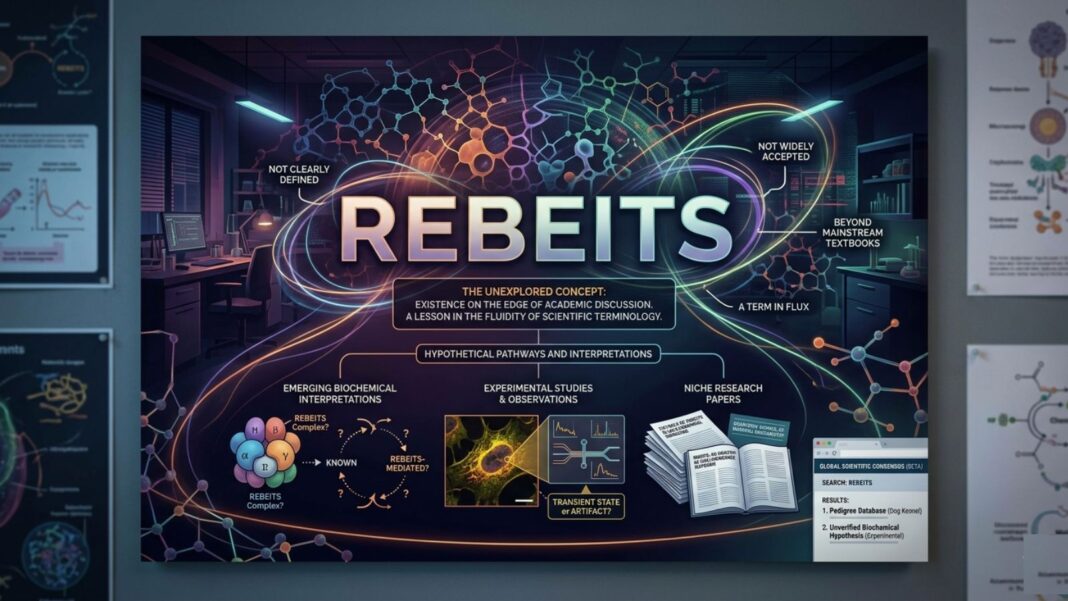
Rebeits – In the world of science, not every term is clearly defined, widely accepted, or deeply explored in mainstream textbooks. Some concepts exist on the edge of academic discussion—mentioned in niche research papers, experimental studies, or emerging biochemical interpretations. One such mysterious and lesser-known term is “Rebeits.”
Unlike established scientific terms such as glycolysis or β-oxidation, Rebeits is not yet recognized as a formal biological theory or standardized concept. Instead, it appears in limited academic discussions, particularly in the areas of plant physiology and fatty acid biochemistry, where researchers explore how plants manage and utilize stored fats for energy production.
So, what exactly is Rebeits? Why is it mentioned in scientific contexts related to plant metabolism? And does it represent a real biochemical pathway or simply an emerging interpretation of existing processes?
Let’s break it down in a clear and structured way.
Understanding the Context of Rebeits
To understand Rebeits, we first need to understand the scientific environment in which it appears.
Plants, like all living organisms, require energy to survive. Unlike animals, plants generate energy through photosynthesis, but they also store energy in the form of carbohydrates and lipids (fats). When energy is needed—especially during growth, seed germination, or stress conditions—plants break down these stored compounds.
One of the most important processes involved in fat breakdown is β-oxidation, a metabolic pathway that converts fatty acids into usable energy.
This is where Rebeits becomes relevant.
In some niche biochemical discussions, Rebeits is associated with:
- Alternative interpretations of fatty acid breakdown in plants
- Enzyme activity outside of traditional mitochondria pathways
- Intermediate energy transfer systems in plant cells
- Specialized studies in seed oil metabolism (such as peanuts and similar plants)
However, it is important to note: Rebeits is not a universally accepted scientific term, and its meaning varies depending on the source.
Rebeits and Plant Fat Metabolism
One of the key associations of Rebeits in literature is its link to fatty acid metabolism in plants, especially during seed germination.
Seeds like peanuts, soybeans, and sunflower seeds store large amounts of energy in the form of oils. When these seeds begin to germinate, they must convert these stored fats into energy for growth.
Traditionally, this is explained through β-oxidation occurring in the mitochondria. But some studies suggest that parts of this process may also occur in other cellular compartments, such as peroxisomes, and involve intermediate biochemical systems.
Rebeits is sometimes used in discussions to describe or reference:
- Non-mitochondrial fat oxidation processes
- Alternative enzyme systems in plant cells
- Energy conversion pathways in germinating seeds
In this context, Rebeits is not a single enzyme or molecule—it is more like a conceptual label used in limited research interpretations.
The Connection to β-Oxidation
To understand why Rebeits appears in academic discussions, we need to revisit β-oxidation.
Fatty Acids→β-oxidation→Acetyl-CoA→Energy (ATP)\text{Fatty Acids} \rightarrow \beta\text{-oxidation} \rightarrow \text{Acetyl-CoA} \rightarrow \text{Energy (ATP)}
β-oxidation is the process where fatty acids are broken down into acetyl-CoA molecules, which then enter energy-producing cycles.
For a long time, scientists believed this process mainly occurred in mitochondria. However, research in plant biology has shown that peroxisomes also play a major role, especially in seed germination.
This discovery expanded the understanding of plant energy systems and introduced the idea that energy metabolism in plants is more distributed and flexible than previously thought.
Rebeits, in some niche references, is linked to this expanded view—representing alternative or intermediate interpretations of fatty acid breakdown pathways.
Why Rebeits Is Not a Standard Scientific Term
Despite its appearance in some academic contexts, Rebeits is not recognized as a formal biochemical term in mainstream science for several reasons:
1. Lack of Standard Definition
There is no universally accepted definition of Rebeits in major biochemical textbooks or databases.
2. Limited Peer-Reviewed Usage
The term appears in very limited or niche publications, often without consistent usage.
3. Overlap With Established Concepts
Most processes attributed to Rebeits are already explained by:
- β-oxidation
- Peroxisomal metabolism
- Lipid mobilization in seeds
4. Possible Attribution to Researcher Naming
In some cases, unusual scientific terms arise from researcher names or localized academic shorthand rather than formal biochemical classification.
Because of these reasons, Rebeits is better understood as a contextual or interpretive term rather than a confirmed biological concept.
Rebeits in Plant Physiology Research
Even though it is not formally defined, the idea connected to Rebeits reflects important themes in plant science:
1. Energy Flexibility in Plants
Plants do not rely on a single energy pathway. They can switch between carbohydrates, fats, and organic acids depending on environmental conditions.
2. Seed Germination Mechanisms
During germination, stored fats are rapidly converted into energy, making lipid metabolism a crucial survival mechanism.
3. Cellular Compartment Collaboration
Plant cells use multiple organelles—mitochondria, peroxisomes, and cytoplasm—to manage energy transformation.
Rebeits, in this sense, may symbolize the complexity and interconnectedness of these systems.
Why Scientists Explore Concepts Like Rebeits
Even unclear or undefined concepts can be useful in science for several reasons:
- They encourage new hypotheses
- They help identify gaps in existing knowledge
- They stimulate experimental research
- They improve understanding of complex biological systems
In biochemistry, especially plant physiology, many discoveries began as loosely defined ideas before becoming formal theories.
So while Rebeits is not a confirmed scientific mechanism, discussions around it may still contribute indirectly to scientific exploration.
Rebeits and the Future of Plant Biochemistry
If we interpret Rebeits as a conceptual framework rather than a strict definition, it aligns with modern trends in biology:
- Multi-organelle energy systems
- Complex lipid metabolism pathways
- Adaptive biochemical networks in plants
Future research in plant metabolism may further clarify whether terms like Rebeits evolve into recognized scientific models or remain historical academic references.
Final Thoughts
Rebeits remains a mysterious and loosely defined term in biochemistry, mostly appearing in niche discussions related to plant fatty acid metabolism and energy production. While it is not officially recognized as a scientific theory, it reflects the ongoing complexity of understanding how plants manage energy at the cellular level.
In many ways, Rebeits symbolizes the frontier of biological research—where not everything is fully defined, and where science continues to evolve through exploration, debate, and discovery.
Whether it becomes a formal concept in the future or remains an academic curiosity, it highlights an important truth: plant biochemistry is far more complex and dynamic than it first appears.
FAQs About Rebeits
1. What is Rebeits in simple terms?
Rebeits is a loosely used term in niche academic discussions related to plant biochemistry, especially fatty acid metabolism. It is not a formally defined scientific concept.
2. Is Rebeits a real scientific theory?
No, Rebeits is not recognized as an official scientific theory in mainstream biology or biochemistry.
3. How is Rebeits connected to plants?
It is often associated with how plants break down stored fats for energy, especially during seed germination and growth.
4. Is Rebeits the same as β-oxidation?
No. β-oxidation is a well-established metabolic process, while Rebeits is more of an interpretive or loosely referenced term sometimes linked to similar discussions.
5. Why do scientists talk about Rebeits?
In some cases, it appears in niche or experimental discussions that explore alternative interpretations of plant energy metabolism, but it is not widely used in formal research.