



Salemalecum – Language is one of the most powerful ways people connect with one another across cultures and traditions. Greetings, in particular, hold deep meaning because they express respect, kindness, and goodwill. One greeting that has traveled across continents and cultures is “Salemalecum.”
You may have seen the word salemalecum used online, in social media posts, or in casual conversations. While it might appear to be a modern or informal word, it is actually a variation of the Arabic greeting “As-Salaam-Alaikum.” This phrase carries a profound meaning and has been used for centuries in many parts of the world.
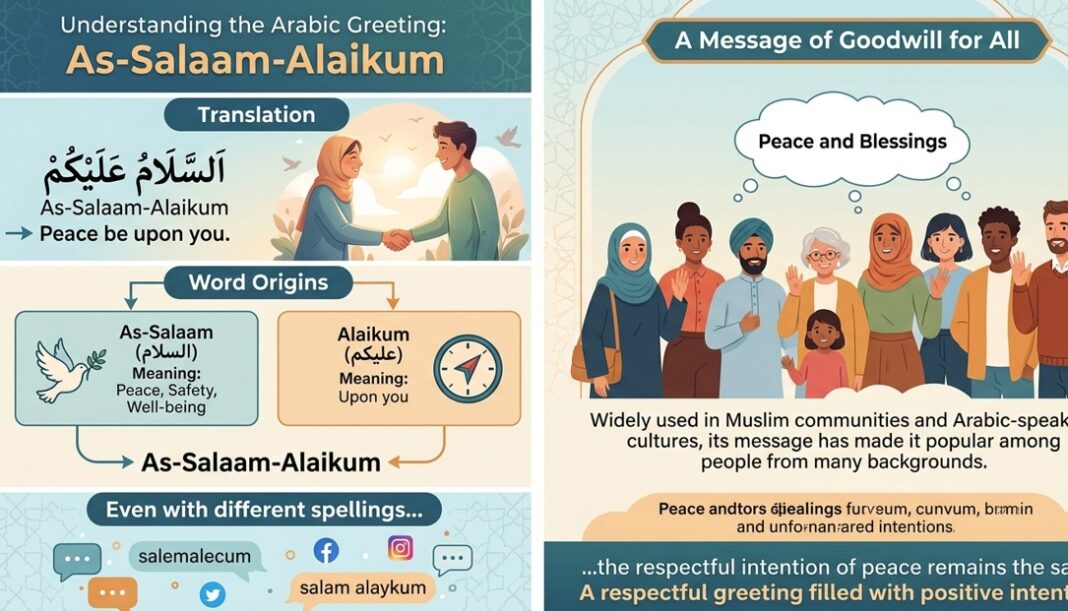
Although spellings like Salemalecum, Salam Alaikum, Salamalekum, or Salamalikum may look different, they all represent the same greeting that wishes peace upon another person.
In this article, we will explore the meaning of salemalecum, its origin, cultural significance, and why it continues to remain an important greeting in modern communication.
What Does Salemalecum Mean?
The word salemalecum is an informal or phonetic spelling of the Arabic phrase “As-Salaam-Alaikum.” The phrase translates to:
“Peace be upon you.”
It is a greeting used widely in Muslim communities and Arabic-speaking cultures. However, its message of peace and goodwill has made it popular among people from many backgrounds.
The phrase is composed of two important Arabic words:
- As-Salaam (السلام) – meaning peace, safety, or well-being
- Alaikum (عليكم) – meaning upon you
When combined, the greeting expresses a wish for peace, safety, and blessings upon the person being greeted.
Even when spelled differently online as salemalecum, the message remains the same: a respectful greeting filled with positive intention.
Why Are There Different Spellings Like Salemalecum?
One reason you may encounter the spelling salemalecum is because Arabic words are often transliterated into English or other languages.
Arabic uses its own script, so when people write Arabic phrases using the Latin alphabet, they must approximate the pronunciation. This leads to several variations such as:
- Salam Alaikum
- Salamalekum
- Salam Aleikum
- Salemalecum
Each spelling attempts to represent the same spoken phrase.
Another reason for variations is informal internet communication. On social media, people often write quickly and spell words based on how they sound rather than using formal transliteration.
Despite the spelling differences, the meaning and intention remain unchanged.
The Historical Origin of the Greeting
The greeting As-Salaam-Alaikum, which the spelling salemalecum represents, has deep historical roots in Islamic and Arabic traditions.
It has been used for centuries as a respectful way of greeting others. The phrase appears in Islamic teachings and is strongly encouraged as a way to spread peace and kindness among people.
In many cultures influenced by Arabic traditions, the greeting serves as more than just a simple “hello.” It symbolizes:
- Peace
- Respect
- Brotherhood
- Goodwill
- Spiritual harmony
The response to the greeting is traditionally:
“Wa Alaikum As-Salaam”
This means “And peace be upon you as well.”
This exchange reflects mutual respect and reinforces the concept of peace between individuals.
Cultural Importance of Salemalecum
The greeting represented by salemalecum carries deep cultural importance in many societies.
1. Symbol of Peace
At its core, the phrase expresses a wish for peace. In a world where communication can sometimes be tense or negative, greetings like this remind people of the importance of kindness.
2. Respectful Communication
Using the greeting demonstrates respect when meeting someone. It is commonly used when:
- meeting friends
- greeting elders
- entering a gathering
- starting conversations
3. Community Connection
In many cultures, greetings help build strong social bonds. Saying salemalecum helps reinforce a sense of unity and belonging.
4. Religious Significance
For Muslims, the greeting holds spiritual meaning. It reflects teachings that encourage spreading peace and goodwill.
However, the greeting is not limited to religious use. Many non-Muslims also use it respectfully when interacting with Muslim communities.
How Salemalecum Is Used Today?
In the modern world, the greeting has adapted to digital communication.
You may see salemalecum used in:
- social media comments
- text messages
- online forums
- YouTube videos
- community groups
Because online communication is often informal, people write the phrase in ways that match their pronunciation.
Despite the different spellings, the greeting continues to carry the same positive meaning.
Salemalecum in Global Culture
As global communication increases, many cultural greetings have spread beyond their original regions.
The greeting represented by salemalecum is now recognized worldwide. People may use it when:
- traveling in Muslim-majority countries
- interacting with diverse communities
- learning about different cultures
- studying Arabic language or Islamic traditions
Learning greetings from other cultures helps build mutual understanding and respect.
The Importance of Greetings in Communication
Greetings play an essential role in human interaction. They set the tone for conversation and reflect cultural values.
A greeting like salemalecum highlights several important communication principles:
Kindness
Starting a conversation with a positive message encourages friendly interaction.
Respect
Using respectful greetings shows consideration for others.
Cultural Awareness
Understanding greetings from different cultures promotes inclusivity.
Connection
Simple words can strengthen relationships and create a welcoming environment.
Why the Meaning of Salemalecum Still Matters?
Even in a fast-paced digital world, greetings that emphasize peace and respect remain valuable.
The message behind salemalecum reminds people to approach interactions with kindness and goodwill.
In an era where online communication can sometimes become negative or divisive, messages centered around peace continue to hold powerful meaning.
This is why the greeting continues to be used and shared across cultures.
Conclusion
The word salemalecum may appear as a simple or informal spelling, but it represents a greeting with deep historical, cultural, and spiritual significance.
Derived from the Arabic phrase As-Salaam-Alaikum, it carries a timeless message: “Peace be upon you.”
Although spellings vary across languages and digital platforms, the intention behind the greeting remains the same — to express peace, respect, and goodwill toward others.
As global communication continues to grow, greetings like salemalecum serve as reminders of the shared human desire for harmony, kindness, and understanding.
FAQs About Salemalecum
1. What does Salemalecum mean?
Salemalecum is an informal spelling of the Arabic greeting As-Salaam-Alaikum, which means “Peace be upon you.”
2. Is Salemalecum the same as Salam Alaikum?
Yes. Salemalecum is simply a different spelling of the same greeting used in Arabic and Islamic culture.
3. Why are there different spellings of the greeting?
Different spellings occur because Arabic words are transliterated into English. People write the phrase based on pronunciation or informal communication.
4. What is the proper response to Salemalecum?
The traditional response is “Wa Alaikum As-Salaam,” which means “And peace be upon you as well.”
5. Is Salemalecum only used by Muslims?
While it has strong roots in Islamic culture, many people from different backgrounds use the greeting respectfully when interacting with Muslim communities.