



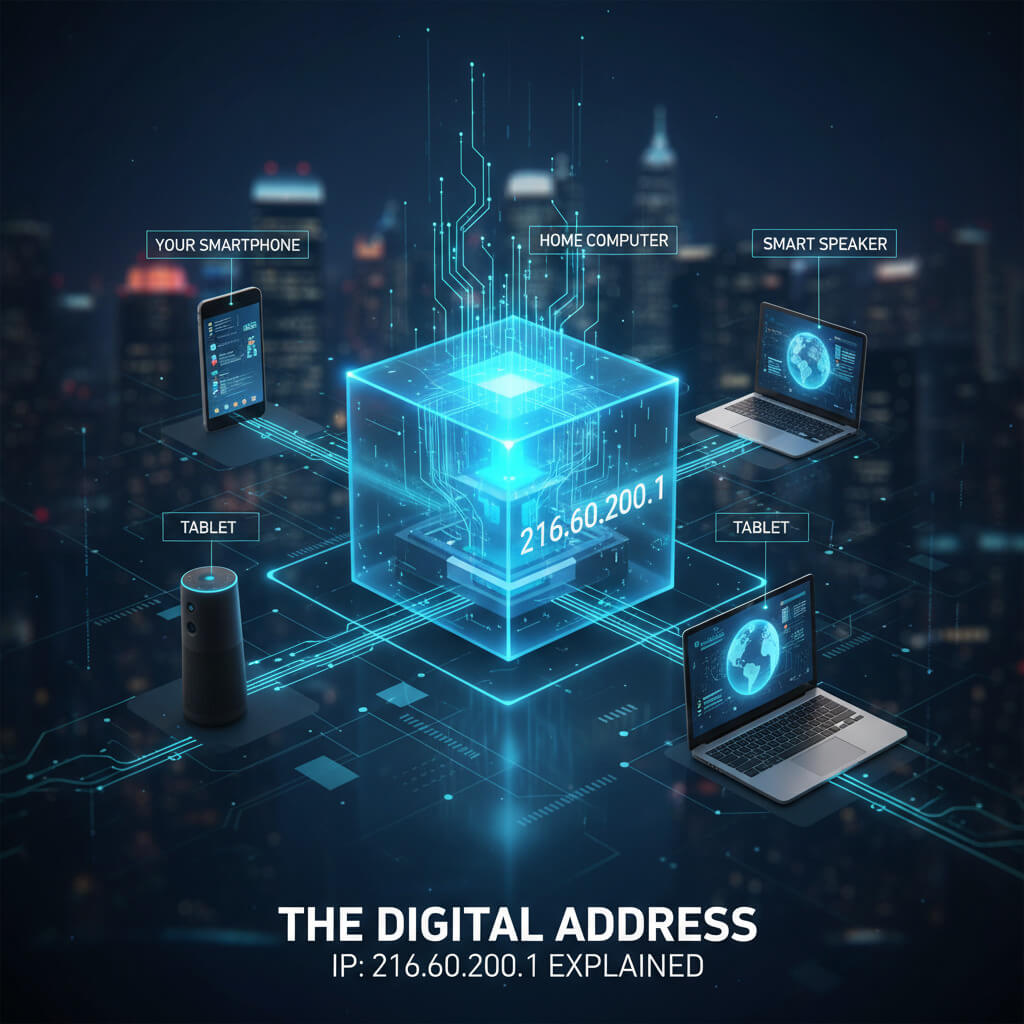
216.60.200.1 – In the world of networking, IP addresses are fundamental for connecting devices to the internet. Every device, from your smartphone to your computer, is assigned a unique address to ensure that data can be sent and received correctly. One such address, 216.60.200.1, is an example of an IPv4 address. But what does it mean? How is it used? And why is it important? In this article, we’ll break down the basics of what 216.60.200.1 is and why it matters.
Understanding IP Addresses
Before diving into 216.60.200.1, it’s helpful to understand what an IP address is in general. IP stands for “Internet Protocol,” which is a set of rules that govern how data is sent across the internet. An IP address is a numerical label that identifies a device on a network, whether it’s your phone, laptop, or a web server.
There are two main types of IP addresses: IPv4 and IPv6. IPv4 addresses, like 216.60.200.1, consist of four numbers separated by periods, each ranging from 0 to 255. These numbers represent the unique identifier for each device on the internet. With over 4 billion possible IPv4 addresses, they are sufficient for connecting devices in most situations, although the world is gradually transitioning to IPv6 to accommodate even more devices.
What Makes 216.60.200.1 an IPv4 Address?
216.60.200.1 follows the typical IPv4 format: four groups of numbers separated by dots, with each group ranging from 0 to 255. This specific address is classified as a “public IP address,” meaning it is routable over the internet and not confined to a private network.
Public IP addresses are used for communication between devices on the internet, such as your computer accessing a website. The number 216.60.200.1 is one such address that can be reached from anywhere in the world, assuming there are no firewalls or restrictions in place to block it. This is in contrast to “private IP addresses,” which are used within local networks and cannot be accessed directly from the wider internet.
The Role of 216.60.200.1
So, what is the function of the specific address 216.60.200.1? As with all IP addresses, it serves as an identifier for a device on the internet. When a device has this address, it can send and receive data packets to and from other devices across the internet. This particular IP address is likely assigned to a web server or another device that needs to be publicly accessible, such as a company server or a network gateway.
For instance, when you visit a website, your browser sends a request to the server associated with that website’s IP address. If the website’s server uses 216.60.200.1 as its public address, your device will communicate with it through that IP, enabling the site to load on your screen.
Public vs. Private IP Addresses
The internet is divided into public and private address spaces. Public IP addresses, like 216.60.200.1, are used to identify devices or services that are accessible over the internet. These are assigned by Internet Service Providers (ISPs) or managed by organizations and are typically used for web servers, email servers, or any service that needs to be reachable by users around the world.
On the other hand, private IP addresses are used within local networks, such as your home Wi-Fi or office network. These addresses cannot be accessed directly from the internet. Private IP addresses help conserve public IP addresses by allowing multiple devices in a local network to share a single public IP address when communicating with external networks.
Is 216.60.200.1 Used by a Specific Company?
IP addresses like 216.60.200.1 are typically assigned to organizations by ISPs or regional internet registries. To find out if 216.60.200.1 is used by a particular company, you can use a tool called an IP lookup service. These tools can tell you the location and the organization that has been assigned a particular IP address.
In the case of 216.60.200.1, it is a public address, which means it could be assigned to a wide variety of devices or servers. It’s common for large organizations or service providers to own such addresses, allowing their services to be accessible worldwide. The specific owner of this address can be identified by querying the IP’s associated registration details.
How Does 216.60.200.1 Relate to Your Internet Experience?
If you’re using the internet, chances are you’ve interacted with an IP address like 216.60.200.1, whether you realize it or not. Every time you visit a website, the server hosting that site has an IP address, and it might be something like 216.60.200.1. This number allows your device to find and communicate with the website’s server.
Additionally, ISPs assign public IP addresses like this one to your home or business network’s router, allowing multiple devices in your household or office to access the internet using a single public IP. The router then assigns private IP addresses to each connected device, ensuring that all traffic is correctly routed to the right destination.
Why Are IP Addresses Important?
IP addresses are critical to how the internet functions. Without them, devices wouldn’t be able to communicate effectively, and data wouldn’t be able to reach its destination. Think of an IP address like a home address: it ensures that data knows where to go, just like a letter knows where to be delivered based on the recipient’s address.
Additionally, IP addresses help to track and manage internet traffic, ensuring that data is properly routed. They also play a role in security, as firewalls and security software often use IP addresses to control access to certain networks or servers. For example, a website or server might use IP filtering to block access from certain regions or restrict access to authorized users.
The Future of IP Addresses
The transition from IPv4 to IPv6 is happening due to the growing number of internet-connected devices. While IPv4 has a limit of about 4 billion addresses, IPv6 increases that number exponentially. This shift is necessary to accommodate the billions of new devices that are being connected to the internet daily, from smartphones to smart home devices.
Despite this, IPv4, and addresses like 216.60.200.1, will continue to be in use for many years. IPv4 addresses are still widely supported, and most networks are designed to work with both IPv4 and IPv6 addresses. The transition is a gradual process, and we are likely to see IPv6 adoption increase as the internet of things (IoT) continues to expand.
FAQs About 216.60.200.1
1. What is 216.60.200.1 used for?
216.60.200.1 is a public IPv4 address used to identify a device, typically a web server or network gateway, on the internet. It allows devices to send and receive data across the web.
2. Is 216.60.200.1 a private or public IP address?
216.60.200.1 is a public IP address, meaning it is accessible over the internet and can be used for hosting websites or other services that need to be reached globally.
3. Can I use 216.60.200.1 for my device?
No, 216.60.200.1 is likely assigned to an organization or service provider. Individual devices typically use private IP addresses within local networks, with a public IP address assigned to the router or gateway.
4. How can I check who owns 216.60.200.1?
You can use an IP lookup tool to find the organization or service provider that owns the IP address 216.60.200.1. These tools provide information such as the geographical location and the organization associated with the IP.
5. Will 216.60.200.1 change over time?
It depends on the network setup. Public IP addresses like 216.60.200.1 can change if they are dynamically assigned by an ISP. However, static IPs are permanent unless the organization or service provider decides to change them.
Conclusion
In conclusion, 216.60.200.1 is an example of a public IPv4 address that serves as an identifier for a device or server on the internet. It plays a critical role in ensuring that data is correctly routed to and from devices on the internet. Understanding IP addresses and how they work helps to demystify the way the internet functions, ensuring that we can better appreciate the technologies that allow us to connect, communicate, and share information.