


Wollwirrware – In today’s rapidly evolving digital landscape, new concepts are constantly emerging to explain how complex systems interact, grow, and adapt. One such intriguing concept is Wollwirrware—a term that represents a multi-layered, interconnected digital ecosystem where systems, platforms, and environments are woven together like threads in a fabric.
Although not yet widely standardized, Wollwirrware offers a powerful way to understand how modern digital infrastructures function. It moves beyond traditional linear systems and instead describes a living, evolving network of interconnected layers, much like soil ecosystems in nature.
This article explores the meaning, structure, and practical use of Wollwirrware, and why it matters in 2026 and beyond.
What Is Wollwirrware?
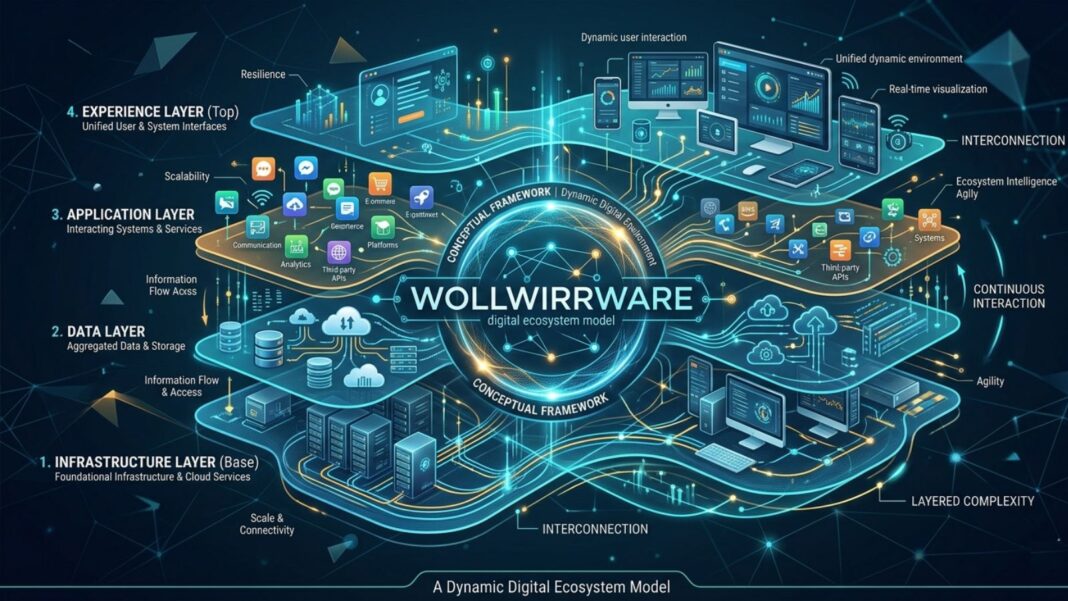
At its core, Wollwirrware can be understood as a digital ecosystem model where multiple systems interact across layers to create a unified yet dynamic environment.
Unlike traditional systems that operate independently, Wollwirrware emphasizes:
- Interconnection
- Multi-tier architecture
- Continuous interaction
- Layered complexity
It is not just a tool or platform—it is a conceptual framework that describes how modern digital environments behave.
The “Woven Soil” Analogy
One of the most unique aspects of Wollwirrware is its comparison to soil ecosystems.
In nature, soil is not just dirt—it is a complex network of microorganisms, nutrients, and organic matter, all working together to support life. Similarly, Wollwirrware environments are described as “soil” because they:
- Support multiple systems simultaneously
- Allow continuous growth and evolution
- Enable interactions between different layers
- Sustain digital “life” (applications, data, and users)
Why This Analogy Matters
The “woven soil” idea highlights that:
- Systems are not isolated
- Every layer contributes to overall functionality
- Growth depends on interaction, not independence
This perspective shifts how we think about digital infrastructure—from static systems to living ecosystems.
Multi-Tier and Multi-Interconnected Systems
Wollwirrware is fundamentally built on multi-tier architecture.
What Does Multi-Tier Mean?
A multi-tier system is one that operates across multiple layers, such as:
- Front-end (user interface)
- Back-end (logic and processing)
- Data layer (storage and management)
In Wollwirrware, these layers are not just stacked—they are deeply interconnected.
Key Characteristics:
- Each layer communicates with others
- Changes in one layer affect the entire system
- Systems can operate independently yet remain connected
This creates a network of systems within systems, often referred to as a “system of systems.”
Systems of Systems: The Core Structure
A major component of Wollwirrware is the idea of systems of systems.
This means:
- Multiple independent systems collaborate
- Each system has its own function
- Together, they form a larger, more complex structure
Examples in Practice:
- Collaboration platforms connected with cloud services
- AI systems integrated with data analytics tools
- Enterprise software linked with user applications
In a Wollwirrware environment, these systems do not just coexist—they interact continuously, creating new possibilities and efficiencies.
From Simple to Multi-Dimensional Layers
Traditional systems often operate in a linear or hierarchical manner. Wollwirrware, however, introduces multi-dimensional layering.
What Are Multi-Dimensional Layers?
These are layers that:
- Interact across multiple directions
- Adapt dynamically to changes
- Support both simple and complex operations
This means a system can:
- Be simple at one level
- Become complex when integrated with others
Example:
A basic communication tool may:
- Function independently (simple layer)
- Integrate with project management and analytics tools (complex layer)
This flexibility is what makes Wollwirrware powerful.
The Role of Collaboration Platforms
Collaboration platforms are a key part of Wollwirrware ecosystems.
These include:
- Team communication tools
- Project management systems
- Cloud-based workspaces
In a Wollwirrware model:
- These platforms are interconnected
- Data flows seamlessly between them
- Users experience a unified environment
This enhances:
- Productivity
- Efficiency
- Decision-making
Benefits of Wollwirrware in Digital Systems
Adopting a Wollwirrware approach offers several advantages:
1. Flexibility
Systems can adapt to changing needs without complete redesign.
2. Scalability
New layers and systems can be added easily.
3. Integration
Different tools and platforms work together seamlessly.
4. Efficiency
Interconnected systems reduce redundancy and improve performance.
5. Innovation
Continuous interaction between systems leads to new ideas and solutions.
Real-World Applications
While Wollwirrware is a conceptual model, its principles are already visible in modern technology.
1. Cloud Computing
Cloud platforms integrate storage, processing, and applications into a unified system.
2. Smart Cities
Urban systems (transport, energy, communication) are interconnected.
3. AI Ecosystems
AI tools interact with data platforms, user interfaces, and automation systems.
4. Enterprise Systems
Businesses use integrated software for operations, analytics, and communication.
These examples reflect the Wollwirrware mindset, even if the term itself is not widely used.
Challenges of Wollwirrware Systems
Despite its advantages, Wollwirrware also presents challenges:
1. Complexity
Managing multiple interconnected systems can be difficult.
2. Security Risks
More connections mean more potential vulnerabilities.
3. Data Management
Handling large volumes of interconnected data requires advanced tools.
4. Integration Issues
Different systems may not always work well together.
Addressing these challenges requires careful planning and robust infrastructure.
Why Wollwirrware Matters in 2026?
In 2026, digital systems are becoming more complex than ever. Businesses and organizations need frameworks that can handle:
- Rapid technological change
- Increasing data volumes
- Growing user demands
- Global connectivity
Wollwirrware provides a way to understand and manage this complexity.
It represents a shift from:
- Isolated systems → interconnected ecosystems
- Static structures → dynamic environments
- Linear processes → multi-dimensional interactions
Future of Wollwirrware
Looking ahead, Wollwirrware concepts are likely to evolve further.
Emerging Trends:
- AI-driven system integration
- Autonomous digital ecosystems
- Decentralized platforms
- Advanced data orchestration
As technology continues to advance, the need for interconnected, adaptive systems will only grow.
Final Thoughts
Wollwirrware is more than just a term—it is a new way of thinking about digital systems.
By viewing systems as interconnected layers within a living ecosystem, we can:
- Build more efficient technologies
- Encourage innovation
- Create sustainable digital environments
The “woven soil” analogy reminds us that true strength lies in connection, interaction, and balance.
In a world where everything is becoming interconnected, Wollwirrware offers a powerful framework for understanding—and shaping—the future.
FAQs About Wollwirrware
1. What is Wollwirrware?
Wollwirrware is a conceptual framework that describes interconnected, multi-layered digital ecosystems.
2. Why is it compared to soil ecosystems?
Because, like soil, it supports multiple interacting elements that work together to sustain growth and functionality.
3. What are “systems of systems” in Wollwirrware?
They are independent systems that collaborate to form a larger, interconnected structure.
4. Where is Wollwirrware used?
Its principles are seen in cloud computing, AI ecosystems, smart cities, and enterprise software systems.
5. What are the benefits of Wollwirrware?
It offers flexibility, scalability, integration, efficiency, and supports innovation in complex digital environments.