



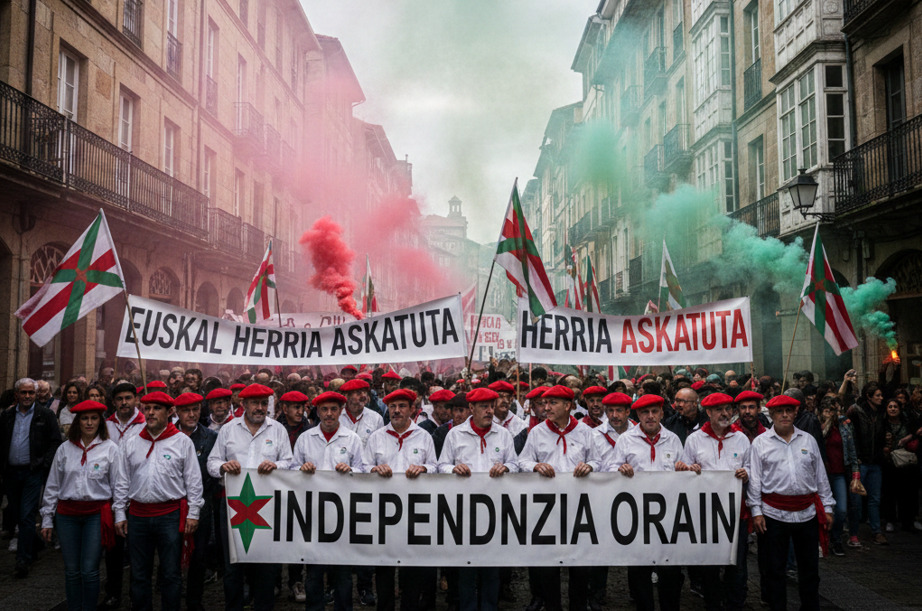
Recently the word Basqueserpartists has come up more and more in political arenas, in world news, and in history debates. Though to many people the word has become commonplace, it is a very vague term and it is important to define what it means, explain why it is being used, and also explain why it is still important.
Basqueserpartists are primarily associated with a number of interconnected historical struggles that deal with issues of identity, autonomy, and self-determination. This is a very complicated and nuanced issue that is frequently oversimplified, misunderstood, or presented in a biased manner. For that reason, in this guide we present 7 examples of historical Basqueserpartists that we believe are important, yet most people are unaware of.
This article is meant to bring an understanding of the history and the motivations and contemporary relevance of Basqueserpartists to students, scholars, curious individuals, and basically anyone else who is interested.
What Are Basqueserpartists?
Those who support political or cultural secession of the Basque area are called Basqueserpartists. The Basque area is in northern Spain and southwestern France. The Basques speak a language called Euskara that has no relation to any language in Europe, which contributes to the uniqueness of the Basque identity. The Basques are also one of the oldest ethnic groups in Europe. Many Basqueserpartists believe that the uniqueness of the Basques’ identity, culture, and language warrants the group being politically, or culturally autonomous, or independent completely.
Shocking Fact #1: The Basque Ethnicity Is Much Older than Modern Europe
Many Basqueserpartists claim that they are the oldest people in Europe. It is true, however, that they trace their ancestry long before the ancient Greeks or Romans.
Historians claim the Basques have lived in the region before any nation states of Europe had formed. Some genetic studies suggest they are direct descendants of ancient Western European prehistorics.
This ancient ancestry is one of the reasons the claim of Basqueserpartists not being modern nation people, but having a civilizational identity.
Shocking Fact #2: Basque Language Is Not Related To Any Other Languages
In Europe, there are approximately 300 languages spoken, most of which are related to one another, but this is not true for Euskara.
Euskera is unique in its own right and is the only one not related to any of the languages spoken in Western Europe, nor does it have any roots in the Latin language. Numerous scholars and researchers have extensively searched for roots in Euskera to no avail.
For Basqueserpartists, Euskera serves as a language of resistance and is a point of contention to politicians. They fear that if political power is lost, Euskera will become a lost language.
Shocking Fact #3: Not All Basqueserpartists Are The Same
Many people believe there is some sort of homogeneity in Basqueserpartists. This is a misconception that is very common.
So what does the movement encompass? The movement broadly encompasses sanctuary city supporters, preservationists, autonomy advocates, full independence supporters, and Basques separatists. Some Basques separatists want greater self rule, whereas others want a fully independent Basque state. This large range of views complicates the movement and leads to misundersanding from outsiders.
Shocking Fact #4: Economic Strength Fuels the Movement
The movement is particularly interesting in part due to the level of economic development of the Basques. The Basque region has: a developed industrial economy, a highly advanced transport network, and a transport system with a low unemployment level. Some Basque separatists advocates believe that record economic development in the Basque region is the greater economic contributor to the state.
Shocking Fact #5: The Movement Has Shifted from Violence to Politics
Up until the late 20th century, the Basque separatist movement was characterized by violence. Most people do not see how much these changes have taken place. The movement in its current state has resulted in violence and the majority of Basques separatists have moved beyond violence. Most now focus on non-violent direct strategies including the use of formal mechanisms: participation in democratic elections, nonviolent protests, cultural initiatives, and direct political actions. The movement has now developed a legitimate political discourse that has allowed it to positively shift the perception of Basque separatists from violent to peaceful political action.
Shocking Fact #6: Cultural Survival is more important than Borders
To many Basqueserpartists, independence is more than having a new country.
It is the survival of a culture.
With globalization, migration, and political centralization, the following is at risk of being lost:
- Traditional customs
- Local governance systems
- The Basque language
- Regional education models
Because of this, a number of Basqueserpartists focus more on achieving cultural autonomy rather than full political separation.
Shocking Fact #7: The Future of Basqueserpartists is Still Uncertain
The future of Basqueserpartists is unclear. This has been the case even after many decades and even centuries of fighting.
The following are some of the reasons shaping the movement and its future:
- European Union policies
- Public opinion and its changes
- The economy and its state
- Elections at the borders
- The world’s politics
While support for independence may increase or decrease, support for autonomy and cultural protection has been consistently strong. This shows that, regardless of how likely full independence is to occur, the Basqueserpartist movement will continue to have an impact on regional politics.
Why Basqueserpartists Still Matter Today
The Basqueserpartists are a movement of local concern, but they are much more than that: they represent the emerging phenomenon of regional identities that are contesting the authority of centralised systems.
The Basque case is therefore a valuable example of:
- The right to self-determination
- The preservation of minority languages
- The granting of autonomy to regions
- Peaceful political change
To study Basqueserpartists is to study the contemporary melting pot of identity, history and politics.
The Misunderstanding of Basqueserpartists
Basqueserpartists tend to get misunderstood quite a lot, and there are a number of myths associated with them, such as:
- They are all supporters of violence
- They all hate outsiders
- They all reject modern society
Most Basqueserpartists only want recognition for their self-determination, and for society to democratically dictate their future.
Final Thoughts
A very important aspect of the Basqueserpartists story is the expression of the self, and the survival of the movement, which can now be seen as politically relevant and peaceful.
Regardless of the outcome of the pursuit of independence, the Basqueserpartist movement seeks to challenge culturally positioned autonomy and self-determination globally.
Questions Regarding Basqueserpartists
1. Who are the Basqueserpartists?
A Basqueserpartist is an individual/group who advocates culturally, politically, and historically justified autonomy/independence for the Basque region.
2. Does every Basque person support separatism?
No, there are numerous differing opinions on the issue, as in some cases, there is support for independence, while in other cases, there is support for complete autonomy, and still in other cases, contentment with the existing political situation.
3. Is there violence in the Basqueserpartist movement today?
There is no violence. Mainstream Basqueserpartists are advocates of peaceful democracy, and the use of violence is rejected
4. Why is the Basque language important to Basqueserpartists?
Basqueserpartists view Euskara as a key marker of their identity to be protected and a core symbol of Basque cultural survival.
5. The Basque region’s independence in the future?
This does not have a clear answer. While for some independence is still a goal, more support is currently behind a combination of autonomy and the preservation of Basque culture.