



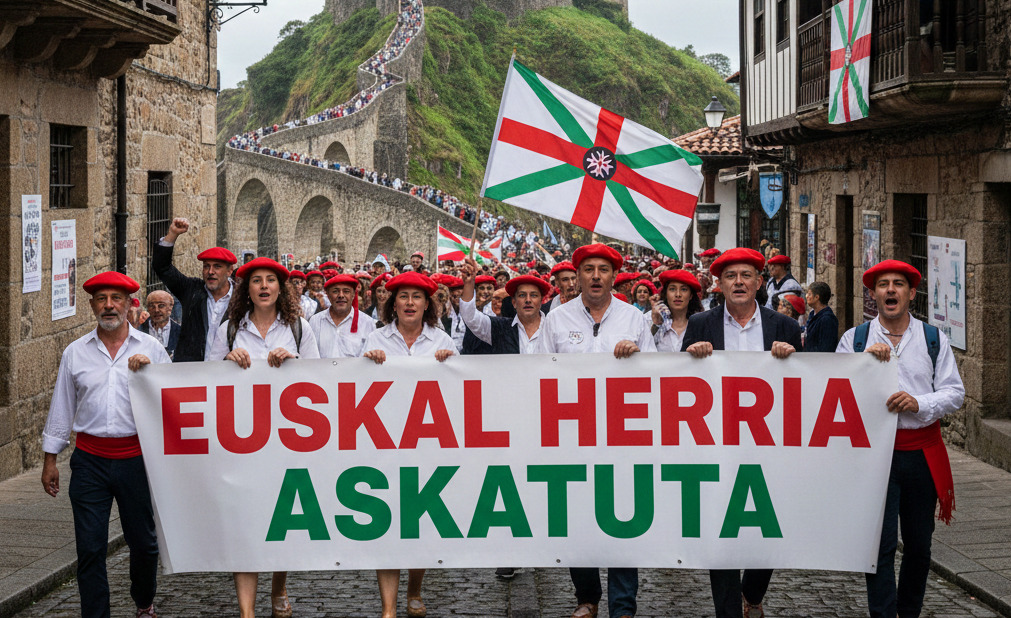
The Basqueserpartists movement is among the most commonly analyzed regional secessionist movements in the field of European studies. Its social, cultural, political, and historical dimensions have impacted the regional politics of Spain and France for decades. Although the movement’s social activism and level of popular support have fluctuated over the years, the Basqueserpartists phenomenon continues to be a pivotal point in socio-cultural and political discussions.
This paper aims to analyze the Basqueserpartists movement, its objectives, reasoning, and causes, while outlining the historical context and its effects over time.
Who Are the Basqueserpartists?
The Basqueserpartists are advocates for secessionist and self-determination movements in the Basque region, crossing northern Spain and Southwestern France. The Basque region, which is inhabited by the Basque people, is one of the oldest European cultures and has its own unique singular language, Euskara, which still exists today.
The term Basqueserpartists mainly characterizes individuals and self-organized communities, as well as political movements, social movements, and community organizations, that support self-determination and self-governance for separated regional parts of the Basque territory. Although divisive or separating a part of the Basque people is usually not the opinion of the majority of the Basque people, the movement appears to have a unifying effect on the political party divisions and polarization within a community.
Historical Background of the Basqueserpartists Movement
The Basques have the only language in Europe that is not related to any language and as a result of archaeological findings, it can be stated that the Basques were the first to inhabit the region. Settlements were in existence long before the European states in the area. Such a deep historical identity laid the basis of the community and their identity and would help them consolidate any future political claims.
Removal of Foreign Sovereignty
The Basque community have enjoyed a very high degree of self-governance as a result of the special legal privileges (fueros) that were present, However, in the 19th century the centralization of power with Spain the self-governing privileges were removed. The removal of self-governing rights caused a high degree of dissatisfaction.
The anticipatory response to the self-governing rights removal was the seeds of the Basqueserpartists movement.
20th Century Political Repression
The sixty years of the Franco (1939–1975) span of the dictatorship in Spain also saw the suppression of the Basque language and culture. Suppression of culture also meant the banning of the public use of the Euskara language as well as the banning of the symbols of culture and the discouraging of public identity of the region.
The Franco years were highly radical and lead to a high degree of separatism and the movement.
Main Causes of the Basqueserpartists Movement
Cultural Preservation
The preservation of the language and culture of the Basque people is the prime motivation of the movement. Many Basques felt that the assimilation policies were highly threatening and that without strong radicalization, the community and people would suffer as a highly identifiable community would be lost.
Political Autonomy
Basqueserpartists state that local self-rule makes it easier to tackle issues like education, taxes, and other aspects of development.
Economic Control
Because of the Basque region’s economic strength, separatists argue that regional autonomy would lead to more efficient and effective economic development and the optimized use of regional assets without dependence on central authorities.
Historical Grievances
The central authorities’ lack of trust during the authoritarian periods of the central government created a deep-rooted mistrust due to the oppression during those periods.
Right to Self-Determination
The central and driving factor of the movement is the belief that Basque people must be the one to determine their political future.
Basqueserpartists Objectives
Full Independence
Some Basqueserpartists envision an independent Basque state, free from Spain and France.
Increased Autonomy
Some seek greater self-governance within the existing countries rather than complete independence.
Cultural Recognition
Preservation of Euskara, local customs, and history is a central objective.
Political Representation
It is important for the movement that Basques have adequate representation at the regional, national, and European levels.
Peace Advocacy
The overwhelming majority of present-day proponents of the movement are committed to democratic and non-violent change of the political status quo.
Political Organizations and Influence
Basqueserpartists ideas have been affiliated with different political parties and organizations. There has been a shift over time to a change from radical approaches to democratic participation to advocacy of policies and elections.
Currently, most Basque political parties centre their policies on:
- Autonomy within the constitutional structures
- Promotion of culture
- Self-management in economy
- Cooperation that transcends borders of the Basque regions
Regional Autonomy Achievements
Arguably the most important effect has been the creation of considerable self-governance in the Basque region, especially in Spain. For example, there is the Basque Autonomous Community, which has its own parliament, police, and tax system.
Cultural Revival
Euskara has been revived thanks to:
Education;
- Media and Broadcasting;
- Government support;
- Political Stability Through Reform
The move from conflict to democratic participation has improved the general stability of the region.
Influence on Other Movements
The movement of Basqueserpartists also inspired the search for autonomy and the right to self-identify in other parts of Europe.
International Awareness
The movement was instrumental in creating awareness on the rights of a given minority, the governance of a region, and the preservation of culture.
Controversies and Challenges
While the movement has made strides, there are still obstacles it must overcome:
- The supporters of the movement are divided amongst themselves
- There are legal and constitutional restrictions
- Full independence has economic uncertainties
- National governments continue to oppose the movement
Even within the movement there are divisions. People in the Basque region hold diverse opinions. People want autonomy but do not want to break away completely.
The Current Status of the Basqueserpartists Movement
The movement has almost entirely changed to a political and peaceful path. The focus has changed to:
- Reform
- Policy change
- Cultural change
- Economic change
- Regional development
The movement has also largely changed from violent confrontation to peaceful and democratic dialogue.
Why the Basqueserpartists Movement Still Matters?
The Basqueserpartists movement is still relevant because it still speaks to the people’s desire for:
- Identity
- Self-determination
- Culture
- Democracy
The conversation on the importance of autonomy and culture is still important in today’s globalized society with the rise of nationalism.
Frequently Asked Questions (FAQs)
1. What is the Basqueserpartists movement?
The Basqueserpartists movement is a political and cultural effort advocating for greater autonomy or independence for the Basque region based on historical identity, language, and self-determination.
2. Where is the Basque region located?
The Basque region is located in northern Spain and southwestern France along the Bay of Biscay.
3. Do all Basque people support separatism?
Definitely not. There is a broad spectrum of opinions on this matter. A good deal opts for remaining within a centralized state, while some would like to see a full separation, others favor complete cultural autonomy.
4. Is the Basque separatists movement still afoot?
Yes, although today, it mainly mobilizes within the democratic arena as a political movement focused on autonomy, as well as the preservation of culture.
5. What is the impact of the movement on Basque culture?
It mostly resulted in the revival of the Basque language, a restructuring of the educational system, establishment of cultural institutions, and self-rule.
Final Thoughts
The Basques separatists movement: causes, objectives and effects is very much intertwined with the history of the Movement, the Identities, and the Politics. It is dominant story of a complex, evolving system of governance. It is undoubtable that it has fostered cultural preservation, though the methods have transformed over the decades, the region and preserved legacy of culture. Legislativa.